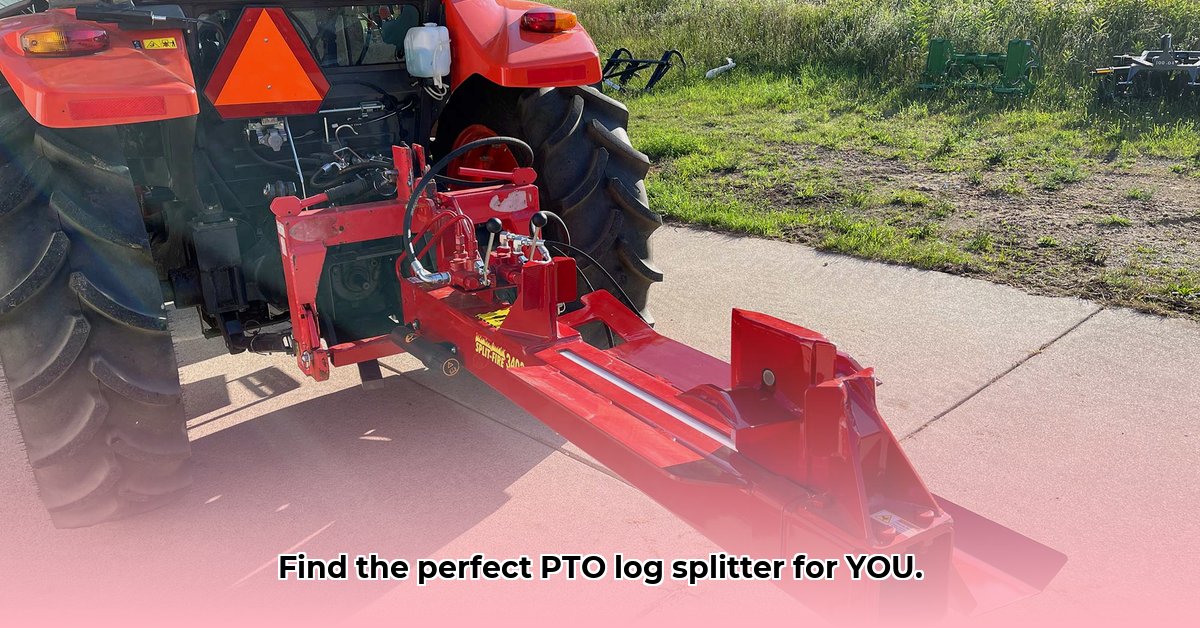
Understanding Tractor-Powered Log Splitters: PTO vs. 3-Point Hitch
Splitting wood by hand is laborious. A tractor-powered log splitter significantly boosts efficiency. This guide helps you choose between two main types: Power Take-Off (PTO) and 3-point hitch models. We'll cover setup, operation, maintenance and safety, ensuring you make an informed decision. For more detailed information on PTO splitters, check out this helpful resource: PTO Log Splitters.
Why a tractor-powered splitter? Think about it: Are you tired of back-breaking work? Do you own a tractor and want to maximize its capabilities? A tractor-powered log splitter makes firewood preparation significantly quicker and easier.
PTO Log Splitters Explained: Harnessing Your Tractor's Power
PTO log splitters use your tractor's power take-off (PTO) shaft to drive a hydraulic pump. This pump generates the force needed to split logs. The PTO shaft acts as a direct link transmitting power from your tractor's engine to the splitter. This arrangement generally offers greater power and is ideal for handling larger logs.
Key Components: The PTO splitter includes the hydraulic pump, a reservoir for hydraulic fluid, a control valve, and the splitting ram. Understanding these components is essential for proper setup and maintenance.
Power and Hydraulics: The horsepower (HP) of your tractor directly impacts the splitter's capability. A higher HP tractor can handle a more powerful splitter and larger logs. Gallons per minute (GPM), indicating the hydraulic fluid flow rate, determines the splitting speed.
3-Point Hitch Log Splitters: A Convenient Alternative
3-point hitch log splitters attach directly to your tractor's 3-point hitch system. These utilize your tractor's existing hydraulic system to power the splitting mechanism. This design often results in simpler installation and potentially lower initial costs. However, their splitting force is usually lower than PTO models, limiting the size of logs they can effectively handle.
Key Considerations: Using a 3-point hitch splitter relies entirely on your tractor's hydraulic system capacity. This implies a close look at your tractor's hydraulic system output capacity (GPM) is essential. Ensure your tractor's hydraulics can meet the splitter's requirements to avoid damage or insufficient performance.
Choosing the Right Log Splitter: PTO or 3-Point Hitch?
The best choice depends on your specific needs and tractor capabilities. Here's a comparative analysis:
| Feature | PTO Log Splitter | 3-Point Hitch Log Splitter |
|---|---|---|
| Hydraulic Needs | Lower; dedicated pump | Higher; uses tractor's hydraulic system |
| Setup | More complex; PTO shaft and hydraulic line connections | Simpler; direct attachment to the 3-point hitch |
| Maintenance | More involved; separate pump and reservoir | Less involved; integrated with tractor's system |
| Upfront Cost | Typically higher | Typically lower |
| Adaptability | Higher; various pump sizes available | Lower; limited by tractor's hydraulic capacity |
| Overall Usefulness | More versatile, adaptable to various tractors | Less versatile, depends on tractor's hydraulic capacity |
Installation and Safe Operation: A Step-by-Step Guide
Installation (Both Types):
- Check Fluid Levels: Ensure the hydraulic reservoir is filled with manufacturer-specified fluid.
- Secure Connections: Attach the PTO shaft or 3-point hitch securely, following the manual precisely. Double-check all connections for leaks.
- Grounding: Make sure the tractor and splitter are grounded to prevent electrical shocks.
Safe Operation (Both Types):
- Clear the Area: Keep the area around the splitter free of obstructions and people.
- Steady the Log: Position the log firmly and safely on the splitter’s bed. Never force a log onto the splitter.
- Engage Safely: Carefully activate the splitting mechanism. Always maintain a safe distance from moving parts.
- Clear Debris: Remove split logs with caution, avoiding contact with moving parts.
Maintenance and Troubleshooting
Regular maintenance is crucial. Check hydraulic fluid levels, inspect hoses for damage, and lubricate moving parts as needed. Consult your owner's manual for specific recommendations from the manufacturer. Addressing small issues early will prevent more extensive repairs down the line.
Conclusion: Making the Right Choice
Selecting the right log splitter hinges on factors like log size, your tractor's capabilities, and budget. Consider your needs carefully, weighing the advantages and disadvantages of PTO and 3-point hitch models. Prioritize safety throughout the entire process—from installation to operation. By carefully following this guide, you'll be well-equipped to choose and safely operate the best log splitter for your needs.